Online memory trainers
This section has memory exercises for every kind of material: remember a number, pictures on cards, a pattern on a grid, the order of flashes or a melody. A game takes two to three minutes, and the length of the number or sequence grows with your correct answers. You can play 10 minutes a day without signing up.
Start with “Remember the Number”Numbers
 Remember the Number
 Digits Backward
Visual memory
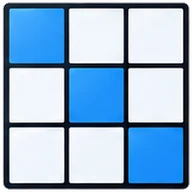 Remember the ColorColored cells light up on the grid for two seconds. Remember where they were and tap them. The grid gradually grows.
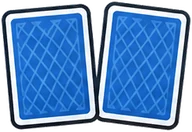 Find the PairThe cards show for three seconds, then flip over. Find the pairs of matching pictures. Each level adds more cards.
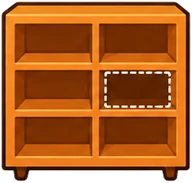 What’s Missing?Items sit on the shelves of a cabinet. Remember them: the cabinet closes and one item disappears. Pick what’s missing.
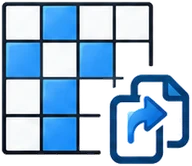 Pattern MemoryA colored pattern shows for a few seconds, then the grid clears. Draw the pattern again and tap “Check”.
Working memory
 N-backCells light up one by one. Answer “Match” if the cell is the same as N steps back. The classic working memory exercise.
 N-back 2Cells light up one by one. Tap “Match” if the cell is the same as two steps back. The level stays the same: the whole ga...
 N-back 3Cells light up one by one. Tap “Match” if the cell is the same as three steps back. The level stays the same: the whole...
 Color MelodyButtons light up one by one and play notes. Repeat the melody: each correct answer makes it longer. You can play muted t...
 Corsi Blocks
 Backward Corsi Blocks
What memory training is
Memory isn’t one storage room but several different skills. Short-term memory holds a phone number while you dial it. Working memory lets you not just hold information but do something with it: add numbers in your head or retrace a route backward. Visual memory remembers where your keys are, and memory for order keeps track of which step comes next. That’s why this section has exercises with different material: digits, pictures, places on a grid, colors and sounds.
Each trainer loads its own side of memory. Digits Backward and Backward Corsi Blocks make you not just repeat but rearrange things in your head. In N-back you constantly update the last few positions and compare them with the one from N steps back. Color Melody asks you to repeat a growing sequence of colors and notes, and What’s Missing? has you spot which item has disappeared from a shelf. The difficulty rises after correct answers, so you work at the edge of your ability, not on an easy task you already know by heart.
Where to start
Pick Remember the Number, Find the Pair and Corsi Blocks. They cover three different kinds of memory — for digits, for pictures and for the order of places — and the rules are clear from the first game. Once you’re comfortable, move on to N-back and Digits Backward: they put a noticeably heavier load on working memory.
How to practice
- Train a little every day: 10 minutes daily does more than an hour on the weekend. Memory responds better to regular practice than to rare marathons.
- Mix up the material: numbers today, pictures and order tomorrow. If you play only one trainer, what mostly grows is your skill at that particular game.
- Find your own way to remember: split a number into groups like a phone number, turn a sequence into a picture or a rhythm, say the order to yourself. A trick you discover in a game can come in handy outside it too.
Get your program in a minute
Answer 4 questions and we’ll put together a daily program of 5 trainers. We’ll email you the full 2-week plan.
Question 1 of 4
Your daily program
Frequently asked questions
How much do I need to practice to see results?
10–15 minutes a day is enough. The first changes usually show up in the exercises themselves: the number you can hold gets longer and you make fewer mistakes. Once you sign up, every game is saved and you can see your progress on a chart in your account.
Will my memory get better in everyday life?
What reliably grows is your skill at similar tasks: holding digits, order and location. How much of that carries over to daily life varies from person to person. Variety helps: the more kinds of memory you work and the more often you try the tricks you’ve found in real life, the better your chances of noticing a benefit outside the game.
Are the memory trainers suitable for kids and people over 60?
Yes. The “Kids” collection (from age 6) includes Find the Pair, Remember the Color, What’s Missing?, Corsi Blocks and Remember the Number. The “60+” collection includes What’s Missing?, Find the Pair and Remember the Number. N-back is best left to teens and adults: it’s one of the hardest exercises on the site.
Which exercise should I start with, and which N-back should I pick?
If you haven’t trained your memory in a while, start with Remember the Number and Find the Pair. Take on N-back when you want a serious challenge: in N-back a game starts at N = 1 and the level rises as you play, while in N-back 2 and N-back 3 it’s fixed for the whole game.
Is it free?
Yes. Every trainer opens without sign-up, and you can play 10 minutes a day for free. Signing up is free too: it saves your results and progress chart, and for now it lets you keep playing after the free 10 minutes. Paid plans are coming soon.
Other trainers
 Digit Span Test
 Chimp Test
 Repeat the Sequence
 Visual Memory
Attention
 Schulte Table
 Schulte Table 5×5
 Shuffling Schulte Table
 Stroop Test
 Stop Signal
 Gorbov–Schulte Table
 Symbol Coder
 Wide View
 Emotions
 Spot the Difference
 Odd One Out
 Visual Search
 Count the Shapes
 More Dots
 Two of a Kind
 Middle Arrow
 Tagged Fish
 Shell Game
 Reaction Test
 Landolt Rings Test
 Click Speed
 Aim Trainer
 Color Blind Test
 Hearing Test
 Task Switcher
 Stroop: Color or Word
 Connect in Order
 Card Sorter
 Same Shape
 Meaning and Color
 Quick Math
 Addition and Subtraction
 Times Tables
 Division Facts
 Greater or Less
 Making Change
 True or False
 Balance
 2048 Online
 Number Sequences
 Tower
 Scales
 Patterns
 Mini Sudoku
 Missing Piece
 Connect the Pairs
 Logic Test
 IQ-Style Test
 Shape Rotation
 Follow the Arrows
 Maze
 Count the Corners