
Well-known methods
Schulte table, Stroop test, N-back, Corsi blocks, Gorbov table. Exercises from psychology in a handy game format.
68 exercises in the form of short games. Each one trains a specific skill: remembering numbers and patterns, staying focused, doing mental math fast. The difficulty adapts to you, and every round is saved to your account with a progress chart.


Memory, attention and quick thinking are skills you use every minute. Like any skill, they work better when you practice them regularly. Sound familiar?





The more often you solve attention and memory tasks, the more confident you get. You can see it in the game: your time drops and you make fewer mistakes.
10–15 minutes every day does more than an hour once a week. Short rounds fit easily into a break, a commute or your morning.
If you play the same thing for a long time, you only get better at that game. That’s why the exercises cover 6 skills and the daily workout changes every day.

Without numbers, change is hard to notice. Your account keeps every round, and your growth shows up on the chart.
Email and password. Your account opens right away.
Enter your age and how many minutes a day you’d like to train.
5 exercises for different skills, already picked for you.
Doing well? Tasks get harder. Making mistakes? They get easier.
Every round is saved. Track your growth by skill and your personal bests.
Schulte table, Stroop test, N-back, Corsi blocks, Gorbov table. Exercises from psychology in a handy game format.

Never boring, never too hard. The level changes as you play each round.

Separate sets for kids and for 60+. The daily workout takes the age in your profile into account.

Every round is stored. A 30-day chart, growth by skill, records and CSV export.

Short rounds of 1–2 minutes. A daily goal and a streak help you keep going.

Works in the browser on your phone, tablet and computer. Nothing to download.
Answer 4 questions and we’ll put together a daily program of 5 trainers. We’ll email you the full 2-week plan.
Question 1 of 4
Paid plans are coming soon. For now, you can keep playing after the free 10 minutes.
10–15 minutes is enough. Consistency matters more than duration, so your account has a daily goal in minutes and a streak counter. You can find your own program with the quiz above.
There’s a separate kids’ set of 15 games with simple rules. Recommended age: 6 and up. For older adults, there’s the 60+ set.
Yes. All you need is an email and a password — no credit card. After you sign up, your account opens with the daily workout.
Yes. All exercises work in the browser on your phone, tablet and computer. No separate app to install.
You can start for free: 10 minutes of play a day plus the daily workout. Paid plans with unlimited full access are coming soon. For now, you can keep playing after the free 10 minutes.
Yes, every round is saved. Your account shows your history, growth by skill, a 30-day chart and personal bests.
Each exercise targets a specific skill and is based on a well-known method. The difficulty adapts to you, and your results come together into one picture of your progress.
No. The exercises train skills in a game format and are not a medical service. If you’re concerned about your memory or attention, see a doctor.
An online brain trainer is a set of short exercises that work specific cognitive skills: memory, attention, processing speed, logic and spatial thinking. The exercises are games, so practicing takes no willpower — you can play any spare moment, on any device.
The main idea is simple: a skill you use regularly on a task that’s doable but not too easy works more confidently. The trainer gives you that kind of task every day and keeps it interesting.
Paper exercises run out fast and don’t adapt to you. An online trainer creates a new task every time, tracks your time and mistakes, and adjusts the difficulty as you play. No printing, no stopwatch, no notebook of results: it all happens automatically.
Regular practice helps you stay focused on one task longer, remember numbers and patterns more confidently, switch between tasks faster and do math in your head. Your score in each exercise grows with practice, and the numbers show it: your time drops, accuracy rises, records fall.
The habit matters just as much. Ten minutes a day, every day, gives your mind a steady workout, like morning exercise for your body. A streak counter and a daily goal help you keep going past the first week.
If you play the same game for a long time, you mostly get better at that one game. That’s why a good brain trainer covers several skills and mixes up the exercises. A daily workout of different tasks gives you a more well-rounded challenge than one favorite game.
For adults, it helps you get into gear before work or study and stay focused through the day. For kids, it turns screen time into useful practice for attention, memory and math before school. For older adults, it keeps up the habit of a daily mental workout and keeps the mind active. Age is taken into account when the daily workout is put together.
Practice every day, ideally at the same time. Start with the daily workout, not just one favorite game. Check your progress chart once a week: it makes changes easier to spot and shows which skills need work. And remember: a brain trainer is skill practice in a game, not a medical service.
Sign up for free, and in a minute you’ll play your first round. No credit card needed.
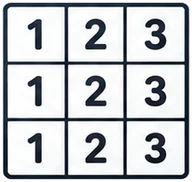 Schulte Table
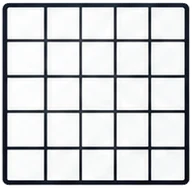 Schulte Table 5×5
 Shuffling Schulte Table
 Stroop Test
 Stop Signal
 Gorbov–Schulte Table
 Symbol Coder
 Wide View
 Emotions
 Spot the Difference
 Odd One Out
 Visual Search
 Count the Shapes
 More Dots
 Two of a Kind
 Middle Arrow
 Tagged Fish
 Shell Game
 Reaction Test
 Landolt Rings Test
 Click Speed
 Aim Trainer
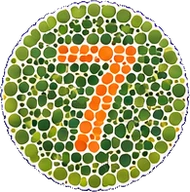 Color Blind Test
 Hearing Test
 Remember the Number
 Digits Backward
 Remember the Color
 Find the Pair
 N-back
 N-back 2
 N-back 3
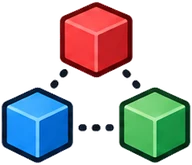 Corsi Blocks
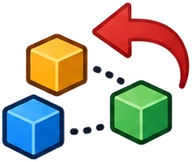 Backward Corsi Blocks
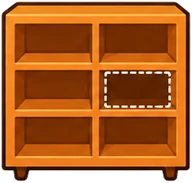 What’s Missing?
 Color Melody
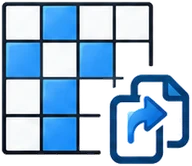 Pattern Memory
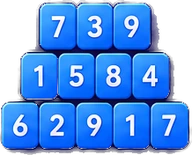 Digit Span Test
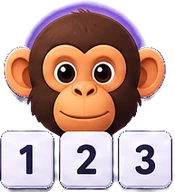 Chimp Test
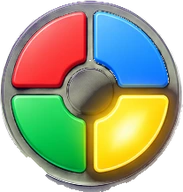 Repeat the Sequence
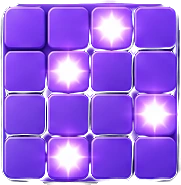 Visual Memory
 Task Switcher
 Stroop: Color or Word
 Connect in Order
 Card Sorter
 Same Shape
 Meaning and Color
 Quick Math
 Addition and Subtraction
 Times Tables
 Division Facts
 Greater or Less
 Making Change
 True or False
 Balance
 2048 Online
 Number Sequences
 Tower
 Scales
 Patterns
 Mini Sudoku
 Missing Piece
 Connect the Pairs
 Logic Test
 IQ-Style Test
 Shape Rotation
 Follow the Arrows
 Maze
 Count the Corners