Brain training games online
68 exercises across 6 skills: memory, attention, cognitive flexibility, math, logic and spatial thinking. Each trainer page has the rules, the method behind it and 10 free minutes of play a day — no sign-up needed.
Brain trainer categories
 Remember the Number
 Digits Backward
 Remember the Color
 Find the Pair
 N-back
 N-back 2
 N-back 3
 Corsi Blocks
 Backward Corsi Blocks
 What’s Missing?
 Color Melody
 Pattern Memory
 Digit Span Test
 Chimp Test
 Repeat the Sequence
 Visual Memory
Attention
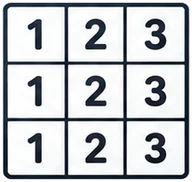 Schulte Table
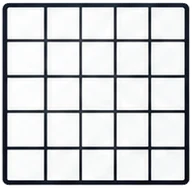 Schulte Table 5×5
 Shuffling Schulte Table
 Stroop Test
 Stop Signal
 Gorbov–Schulte Table
 Symbol Coder
 Wide View
 Emotions
 Spot the Difference
 Odd One Out
 Visual Search
 Count the Shapes
 More Dots
 Two of a Kind
 Middle Arrow
 Tagged Fish
 Shell Game
 Reaction Test
 Landolt Rings Test
 Click Speed
 Aim Trainer
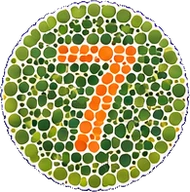 Color Blind Test
 Hearing Test
 Task Switcher
 Stroop: Color or Word
 Connect in Order
 Card Sorter
 Same Shape
 Meaning and Color
 Quick Math
 Addition and Subtraction
 Times Tables
 Division Facts
 Greater or Less
 Making Change
 True or False
 Balance
 2048 Online
 Number Sequences
 Tower
 Scales
 Patterns
 Mini Sudoku
 Missing Piece
 Connect the Pairs
 Logic Test
 IQ-Style Test
 Shape Rotation
 Follow the Arrows
 Maze
 Count the Corners
Online brain trainers: how to choose exercises
Brain trainers are short exercises in the form of games, each working a specific skill: memory, attention, processing speed, mental math, logic or spatial thinking. A round lasts 1–2 minutes, the difficulty adapts to you, and your results are saved to your account.
The catalog has 68 exercises. Many of them are based on well-known methods from psychology: the Schulte table, the Stroop test, N-back, Corsi blocks, the Gorbov–Schulte table. You can try any trainer without signing up — 10 minutes of play a day for free.
Memory trainers
Memory exercises ask you to hold information and reproduce it: remember a number and type it back, repeat the sequence in Corsi blocks, or spot what’s missing from the shelf. N-back loads working memory — the kind that keeps several things in mind at once.
Attention exercises
Schulte table trains sustained attention and visual search speed, the Stroop test trains focus and ignoring distractions, the stop signal trains reaction and self-control, and wide view trains your field of attention, when you need to notice what happens in the center and at the edges at once.
Cognitive flexibility and logic
Flexibility is the ability to switch between rules quickly. It’s trained by the switcher, connecting numbers and letters in turn and the sorter, where you have to figure out the rule yourself. Logic tasks include number series, patterns, scales and the tower, where planning your moves ahead is key.
Mental math
Quick Math means mental math with growing difficulty, greater or less is comparing expressions against the clock, and change is a practical task: count out change with the fewest coins.
How to practice so you see results
Consistency beats duration: 10–15 minutes every day does more than an hour once a week. Train different skills — if you play the same thing, you mostly get better at that particular game. The easiest way to start is the daily workout in your account: five exercises for different skills, already picked for your age. Check your progress chart once a week to see which skills need work.
For kids and older adults
For kids 6 and up, there’s a set with simple rules: attention, memory and math through play. For people over 60, there’s the 60+ set with large text and a relaxed pace. The exercises train skills in a game format and are not a medical service.