
Adults
A check of working memory and attention.
Also known as: sequence memory test online, Simon-style memory game, color sequence memory game, repeat the pattern game
Four colored pads light up one after another. Repeat the order by tapping the pads. Each time the sequence is one step longer, and the first mistake ends the test. Your result is the longest sequence you repeated. Your result is free once you enter your email: we’ll show it to you and send it to your inbox.
Go to the game ↓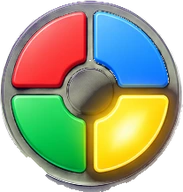


The game checks your memory for sequences: how many steps in a row you can hold and reproduce in the right order. With every success the sequence gets longer and the display gets faster.
Most people reach 6 to 10 steps. That’s a guide for comparing your own attempts, not a diagnosis.
Hold the sequence in your head.
Remember the exact sequence, not just the set.
Don’t miss a single flash.
Keep it together on long sequences.
Press “Start”. The first pad lights up.
Tap the pad that lit up.
Each time a new pad is added: watch the whole sequence again.
The first mistake ends the test. You’ll see your longest sequence.
Press “Start” and watch the pads light up. You can play 10 minutes a day without signing up.
Sequence Memory Test
Four colored pads light up one by one. Repeat the order. Each round the chain grows by one step; the first mistake ends the test.
Free play left today without signing up: 10 min
The “repeat a sequence of signals” idea has been around for a long time: electronic games of the 1970s and many memory tasks in psychology are built on it. It checks your short-term and working memory span for sequences.
Our version is simplified and meant for practice and self-observation; it isn’t a clinical test.
A check of working memory and attention.

Suitable for school-age kids: the rules are clear right away.

Large pads, and the display starts out slow.
Answer 4 questions and we’ll put together a daily program of 5 trainers. We’ll email you the full 2-week plan.
Question 1 of 4
Most people reach 6–10 steps. Our benchmarks: up to 5 is beginner, 6–8 is average, 9–11 is high, and 12 or more is very high.
The first mistake ends the test. Your result is the longest sequence you repeated without a mistake.
It helps to come up with a rhythm or to name the colors to yourself.
No, the game is silent: the pads light up, and you remember the order by color and position.
No. It’s a game-style check for self-observation and for comparing your own attempts. It doesn’t diagnose anything and doesn’t replace a doctor’s advice.
 Remember the NumberMemory for digits
 Chimp TestMemory for positions
 Corsi BlocksSpatial memory
 Color MelodyMemory for sounds and colors
All exercises for this skill: Memory trainers online
Free sign-up: round history, a chart by skill and a daily workout of 5 exercises. No credit card needed.
 Schulte Table
 Schulte Table 5×5
 Shuffling Schulte Table
 Stroop Test
 Stop Signal
 Gorbov–Schulte Table
 Symbol Coder
 Wide View
 Emotions
 Spot the Difference
 Odd One Out
 Visual Search
 Count the Shapes
 More Dots
 Two of a Kind
 Middle Arrow
 Tagged Fish
 Shell Game
 Reaction Test
 Landolt Rings Test
 Click Speed
 Aim Trainer
 Color Blind Test
 Hearing Test
Sign up — it’s free: 10 minutes of play every day, plus history and progress.
While you think it over, read what this exercise trains.
 Digits Backward
 Remember the Color
 Find the Pair
 N-back
 N-back 2
 N-back 3
 Backward Corsi Blocks
 What’s Missing?
 Pattern Memory
 Digit Span Test
 Visual Memory
 Task Switcher
 Stroop: Color or Word
 Connect in Order
 Card Sorter
 Same Shape
 Meaning and Color
 Quick Math
 Addition and Subtraction
 Times Tables
 Division Facts
 Greater or Less
 Making Change
 True or False
 Balance
 2048 Online
 Number Sequences
 Tower
 Scales
 Patterns
 Mini Sudoku
 Missing Piece
 Connect the Pairs
 Logic Test
 IQ-Style Test
 Shape Rotation
 Follow the Arrows
 Maze
 Count the Corners