Logic trainers online
8 logic exercises: find the rule in a number series or a grid of shapes, piece together a chain of weighings, fill in a sudoku, connect pairs with lines and plan your moves several steps ahead. Most rounds last a minute and a half to two minutes, and 2048 has no timer at all. You can play 10 minutes a day without signing up.
Start with “Number Sequences”Patterns
 Number SequencesFind the pattern and continue the number sequence. Three correct answers in a row and the puzzles get harder.
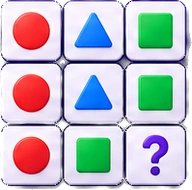
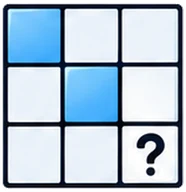 PatternsIn a 3×3 grid, the shapes change by rules across rows and columns. Find the shape for the empty cell.
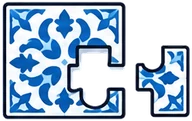 Missing PieceA piece of the pattern is missing. The pattern repeats, mirrors or rotates: find the rule and pick the piece for the “?”...
Deduction
 Scales
 Mini Sudoku
Planning
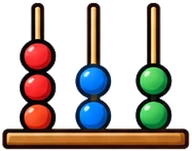 TowerMove the balls to match the target picture. You can only take the top ball. The fewer moves, the more points.
 2048 OnlineSlide the tiles: matching ones merge into one. Make the 2048 tile, or score as many points as you can.
 Connect the PairsConnect matching symbols with lines through neighboring cells. Lines can’t cross or go through walls. 13 levels: each so...
What logical thinking is
Logic is the ability to draw conclusions from what you know and to check them. Comparing plans to see which one is the better deal, figuring out why a device isn’t working, building a schedule so everything gets done: each time you need to spot a rule, connect the facts and not trust your first guess until you’ve checked it.
The section has three kinds of tasks. In Number Sequences, Patterns (that’s Raven’s Matrices) and Missing Piece, you find the rule and apply it to the empty spot. Scales and Mini Sudoku are step-by-step deduction: a few facts lead you, one step at a time, to the answer. Tower, also known as the Tower of London, 2048 Online and Connect the Pairs teach planning: thinking a couple of moves ahead before making the first one.
Where to start
Start with Number Sequences and Scales: the rules are clear right away, and the difficulty grows gradually. Make Tower your third: it shows nicely whether you tend to think first and act second.
How to practice
- Check the whole rule. Test the pattern you found against the entire series or the entire grid, not just the first two items: wrong options often fit part of the puzzle.
- Think the move through first, then make it. In Tower extra moves earn fewer points, and in 2048 one bad slide can wreck the order on the board, so there’s every reason not to move at random.
- Stuck on a level? Switch to another trainer in the section and come back tomorrow. A fresh look at patterns often helps more than sheer persistence.
Get your program in a minute
Answer 4 questions and we’ll put together a daily program of 5 trainers. We’ll email you the full 2-week plan.
Question 1 of 4
Your daily program
Frequently asked questions
How much time should I spend on logic?
10 minutes a day is enough: three or four rounds on different kinds of tasks. Logic exercises take focus, so it’s better to do them while your mind is fresh, not at the end of a tiring day.
Will it make real-life problems easier to solve?
In the trainers, your skill at similar tasks does grow: you spot patterns faster, hold a chain in your head and plan your moves. How much carries over to work and everyday problems varies from person to person. It’s more noticeable if in real life, too, you talk through your reasoning and check your conclusion before you act.
Are the logic trainers suitable for kids and people over 60?
Scales is in the “Kids” collection for ages 6 and up, and Number Sequences is in the “60+” collection. The other exercises start with simple tasks: in Mini Sudoku the first grid is 4×4, and in Patterns only one feature changes on the first level, so both schoolchildren and adults can give them a try.
Where should I start if logic puzzles are hard for me?
With Scales: on the first levels there are only a few items, and the chain is easy to build. Then Number Sequences, where you can see the rule from a few numbers, and Patterns, where only one of three features changes on the first level.
Is it free?
Yes. Every puzzle can be opened without signing up, and you can play 10 minutes a day for free. With a free account, your results and progress chart are saved. Paid plans are coming soon; for now you can keep playing after the free 10 minutes.
Other trainers
 Remember the Number
 Digits Backward
 Remember the Color
 Find the Pair
 N-back
 N-back 2
 N-back 3
 Corsi Blocks
 Backward Corsi Blocks
 What’s Missing?
 Color Melody
 Pattern Memory
 Digit Span Test
 Chimp Test
 Repeat the Sequence
 Visual Memory
Attention
 Schulte Table
 Schulte Table 5×5
 Shuffling Schulte Table
 Stroop Test
 Stop Signal
 Gorbov–Schulte Table
 Symbol Coder
 Wide View
 Emotions
 Spot the Difference
 Odd One Out
 Visual Search
 Count the Shapes
 More Dots
 Two of a Kind
 Middle Arrow
 Tagged Fish
 Shell Game
 Reaction Test
 Landolt Rings Test
 Click Speed
 Aim Trainer
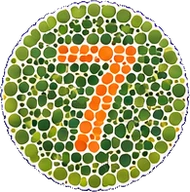 Color Blind Test
 Hearing Test
 Task Switcher
 Stroop: Color or Word
 Connect in Order
 Card Sorter
 Same Shape
 Meaning and Color
 Quick Math
 Addition and Subtraction
 Times Tables
 Division Facts
 Greater or Less
 Making Change
 True or False
 Balance
 Logic Test
 IQ-Style Test
 Shape Rotation
 Follow the Arrows
 Maze
 Count the Corners